


How Breath of the Wild Re-imagined Open-World Gaming

Updated: Dec 9, 2019
Hello and welcome back to my blog, my sweet little sugar plums!
This week, I was thinking about what interesting game mechanics or approaches to story I have come across in my favorite video games. As I was pondering this, the first thing that came to my mind was my favorite game for the Nintendo Switch, The Legend of Zelda: Breath of the Wild, along with a few videos I found online of popular YouTube gamers analyzing Nintendo’s first attempt at open-world gaming. My favorite videos discussing this topic are MojoPlays’ “How Zelda: Breath of the Wild Changed Open World Games,” Writing on Games’ “Why Breath of the Wild’s Empty Space is So Important,” and Frustrated Jacob’s “How Legend of Zelda: Breath of the Wild Fixes “Ubisoft Towers”. I am going to be summarizing what is addressed in their videos in this post, but I would strongly recommend you watch the videos yourselves (after reading this post, of course) for a more detailed analysis of everything Breath of the Wild does right with open-world gaming.
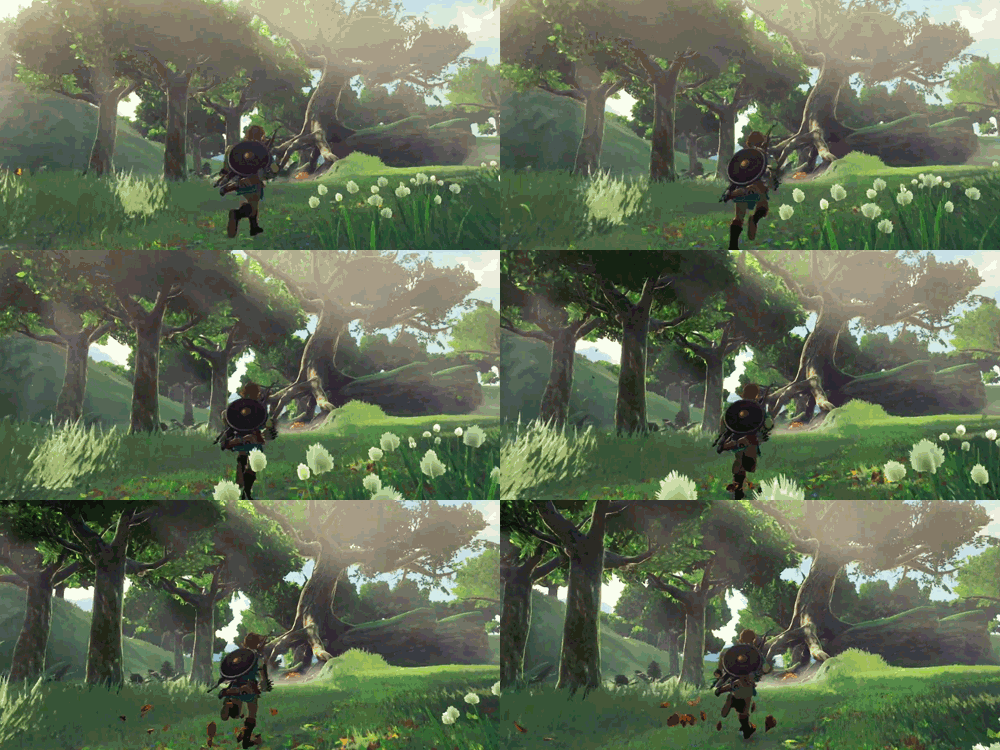
Anyone who has played Breath of the Wild knows that the main theme of this game is exploring the wild, and it is this theme of exploration that the game’s developers made central to the experience of the game, while simultaneously encouraging the player to take full advantage of its open world. It does this by eliminating the linear plot line found in past Zelda games, instead giving the player very few goals to follow. These goals, which consist of awakening the Divine Beasts, are found in the far corners of the map and are not required to be completed in a specific order, giving the player the freedom to choose their own path and pace within the game.
In other open-world games, such as Read Dead Redemption or Borderlands, exploration of the map is facilitated by a linear plot, where the player is expected to travel from point A to point B to point C to progress the plot. This linear plot style often gives the player tunnel-vision, encouraging them to focus more on furthering the plot than on exploration, which ultimately leaves large parts of the map undiscovered and wasted on a player that has no motivation to explore these parts of the map.
Also, as addressed in Frustrated Jacob’s video, Breath of the Wild also fixes the problem of “Ubisoft Towers” (copy-pasted towers that reveal portions of the map, highlighting notable areas that the player is expected to explore) by revealing portions of the map without giving the player a waypoint or goal to head to. This further encourages the player to discover the secrets hidden throughout all areas of the map, whether they are looking for a shrine, a Korok seed, a quest, or another tower.
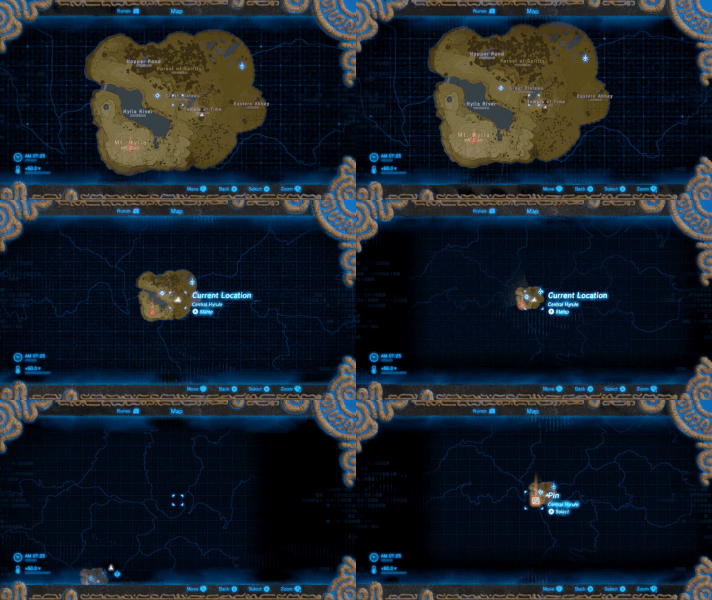
I love Nintendo’s new take on an open-world game and the freedom it gives the player, and I am very excited to see what mechanics they carry over into the sequel of Breath of the Wild. I think open-world games that give the player the freedom to create their own experience while still progressing through the story of the game (AKA, NOT sandbox games) should shape the new generation of games, since it has proven to give the player an intensely personal and immersive experience, which we know is important to games as literature. One criticism Breath of the Wild often receives is how story appears to have been sacrificed in favor of more freedom, but I believe that this doesn’t need to be the case. I am excited to see how future games intertwine freedom and plot together in open-world games, to give the player an intensely personal and thought-provoking story experience.
And that's it till next time, cuties~
ricecakerabbit


Comments